Smoked Chuck Roast, the Poor Man’s Brisket Done Right
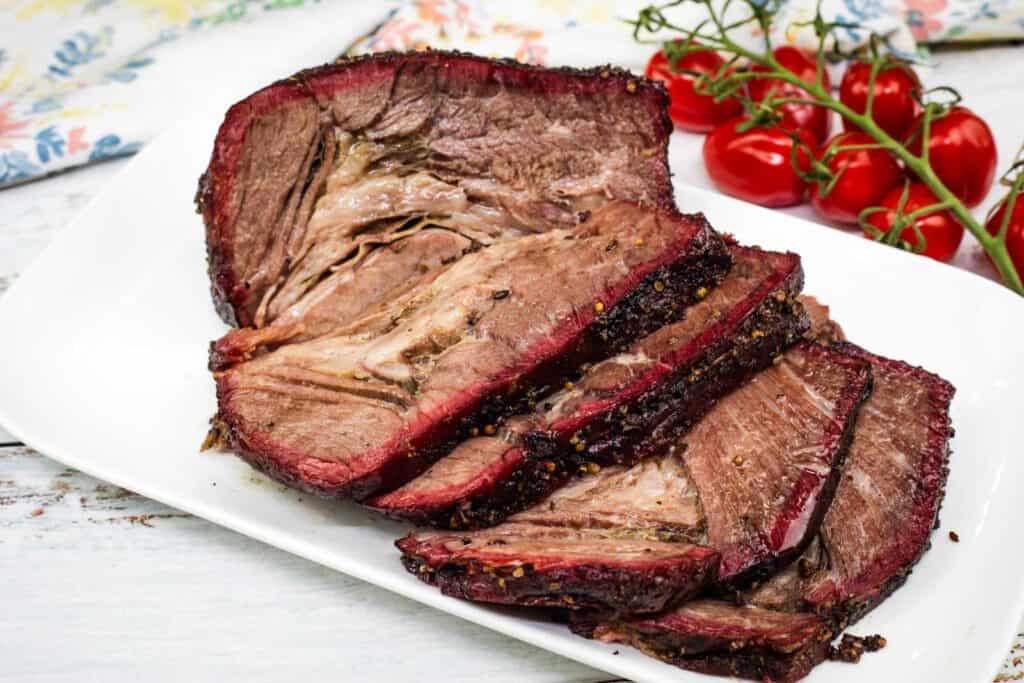
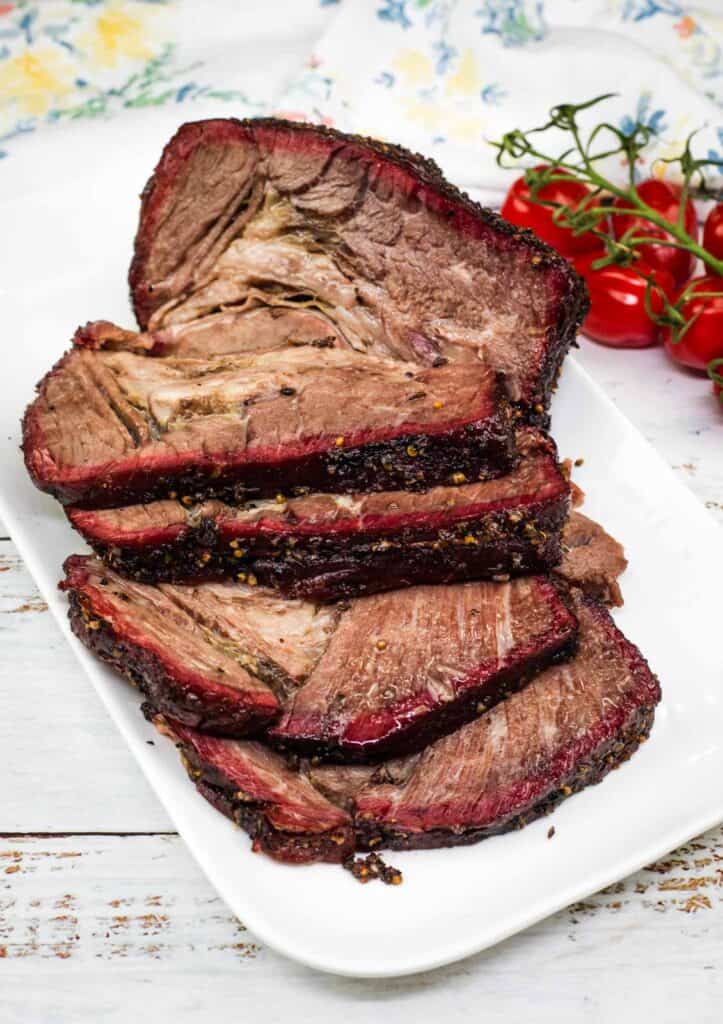
This is the cut I reach for when I want brisket flavor without brisket money or a 16-hour cook. A smoked chuck roast gives you the bark, the smoke ring, and that pull-apart texture for a fraction of the price, and it’s forgiving if you’re newer to your smoker.
This post may contain affiliate link(s). As an Amazon Associate, I earn from qualifying purchases. See Disclosure.
The whole thing rides on two numbers: 165°F before you wrap, 205°F before you pull. Chase those, not the clock. Get there and the collagen breaks down into something you can slice for plates or shred for sandwiches.
Fire It Up: 33 Recipes for Your Smoker

Bold, Texas-style BBQ favorites — tested and ready for your smoker. This digital recipe eBook features recipes like:
These are digital products. You'll receive instant download link/s after purchase.
NEW!


* Smoked Leg of Lamb
* Smoked Peach-Chipotle Wings
* Smoked New York Strip Roast
BUNDLE AND SAVE
The bundle includes 50+ Smoker Recipes and (New) Fire It Up! 33 Recipes for Your Smoker digital recipe eBooks.
Chef Jenn’s Take on Smoked Chuck Roast
Most people treat chuck like a brisket stand-in and get disappointed when it cooks differently. It’s a different muscle with more fat marbling running through it, which is good news. It’s harder to dry out, and it forgives a smoker that runs a little hot or uneven.
The key that makes this version work: wrap at 165°F, not before. You want the bark set first, then the paper protects it while the roast pushes through the stall to 205°F. Pull early and you’ve got pot roast, not poor man’s brisket. The probe should slide in like the meat isn’t even there.
What You’ll Love About Smoked Chuck Roast
- You get the brisket experience for the price of a chuck roast, which means you can practice your smoke without flinching every time you check the price per pound.
- Chuck has more marbling running through it than brisket, so it’s a lot harder to ruin if your smoker runs hot or your timing slips.
- One roast does three jobs: slice it for plates, shred it for sandwiches, chop it for tacos, and I’ve never had the same meal twice off one cook.
Ingredients
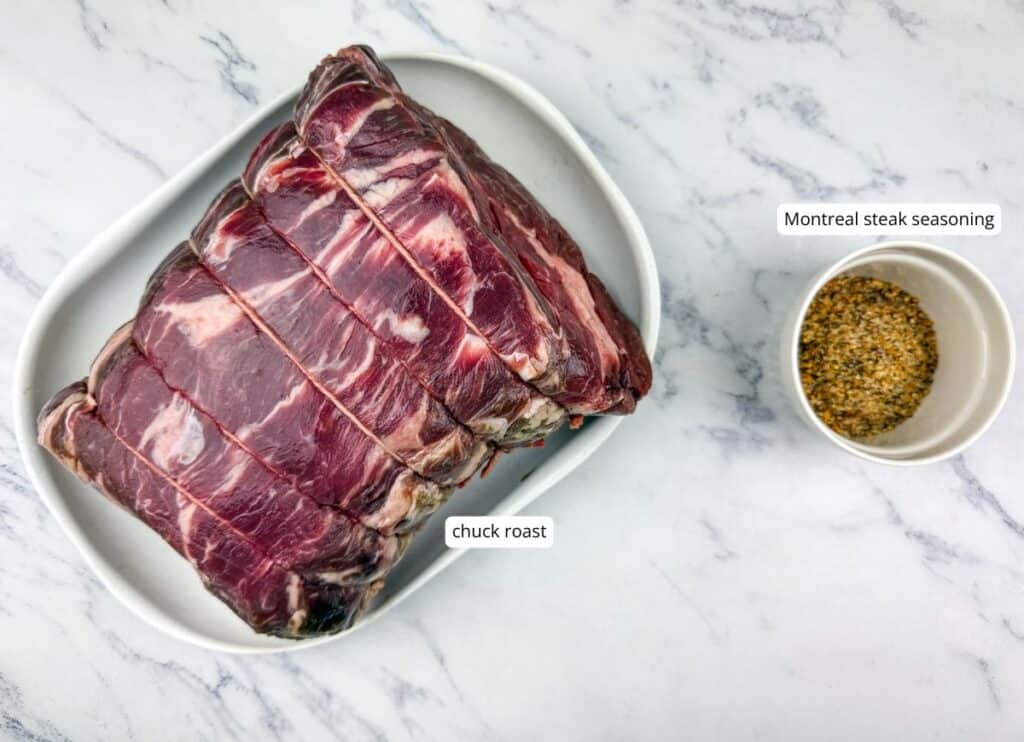
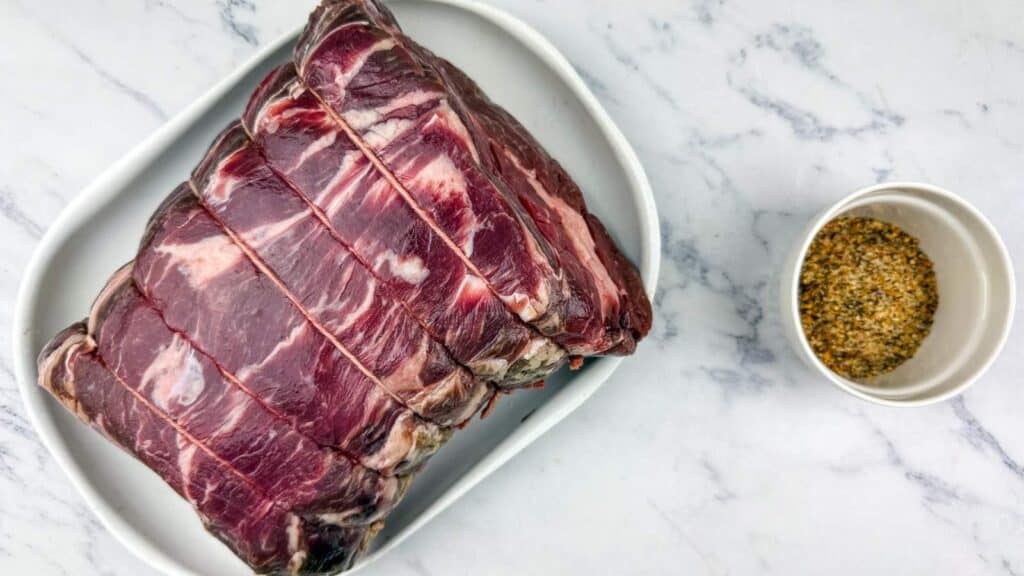
- Chuck roast – Look for one with good marbling running through it. Tie it with butcher’s twine if it has floppy, uneven sections, so it cooks at one pace.
- Steak seasoning (Montreal-style) – Salt and coarse pepper alone will do the job if that’s what you have. Whatever you use, go generous and press it in.
- Heavy-duty butcher paper (unbleached) – Don’t swap in foil. Foil traps too much steam and softens the bark. Parchment is too flimsy for this long a cook.
How to Make Smoked Chuck Roast
Scroll down for the full recipe card with exact measurements and printable instructions.
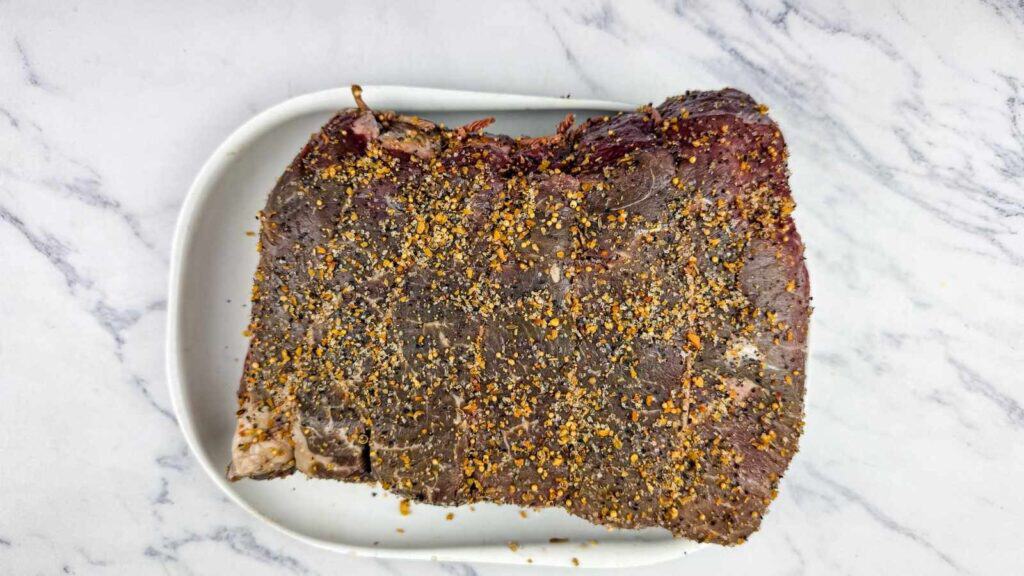
Pat the roast dry on all sides, then season generously and press the seasoning into the meat. Let it sit uncovered at room temperature for 30 to 45 minutes while your smoker comes up to temp. Dry surface plus rested meat gives you better bark.
Set the pellet smoker to 225°F and preheat with the lid closed for about 15 minutes. Hickory, oak, or a competition blend all work well with beef. Post oak is the Texas move if you have it.
Place the roast on the grates fat side up and smoke until the internal temp hits 165°F. This is where the bark builds, so don’t rush it. Expect roughly 4 to 5 hours, but go by the probe, not the clock.
Pull the roast and wrap it tight in two sheets of butcher paper, sealing all the edges. Double wrapping holds moisture and protects the bark better than a single layer.
Bump the smoker to 250°F and return the wrapped roast. Push the probe through the paper and cook until it reads 205°F and slides in with little resistance. That give is how you know the collagen has done its work.
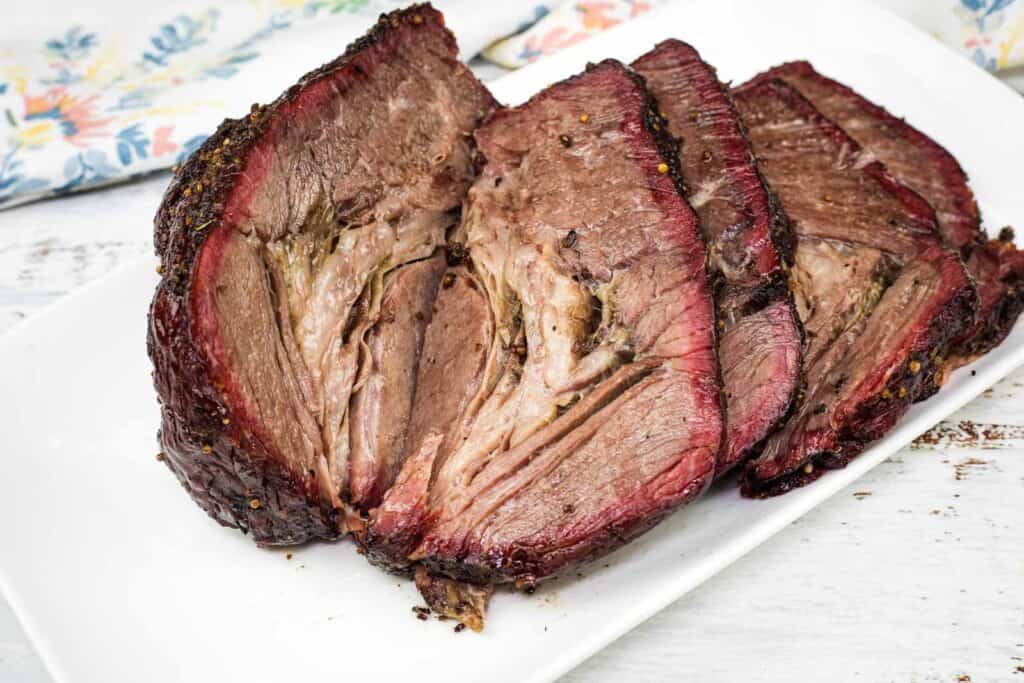
Rest the roast still wrapped for at least 30 to 45 minutes before you open it. Then slice against the grain for plates, or pull it apart for sandwiches and tacos.
Make It A Meal
Smoked chuck roast wants the Texas plate around it. I serve it with Smoked Double Stuffed Baked Potatoes since they can ride the same smoker, and a scoop of Texas Corn Succotash for something fresh against the rich beef.
For a full barbecue spread, add Sauce Smoked Beans on the side. And if you’re shredding the roast for sandwiches, drizzle on my Chipotle Bourbon BBQ Sauce.
Storage
Store leftover smoked chuck roast in an airtight container in the fridge for up to 4 days. Reheat gently with a splash of beef broth or the reserved paper juices so it doesn’t dry out. It freezes well for up to 3 months; thaw overnight in the fridge before reheating.
Frequently Asked Questions
Because it delivers a similar smoky, pull-apart result for a lower price per pound. Chuck comes from the shoulder and has heavy marbling, so it smokes into a comparable texture without the cost or length of a full brisket.
Wrapping isn’t required, but it helps. Wrapping at 165°F pushes the roast through the stall faster and keeps it moist, while still letting the bark stay firmer than it would in foil. An unwrapped roast will take longer and can dry at the edges.
Yes. Any smoker that holds a steady 225°F to 250°F works, including a charcoal or offset setup. The target temps stay the same: 165°F before wrapping, 205°F before pulling.
Smoked Chuck Roast Recipe
Ingredients
- 3.5 – 4 pounds chuck roast tied if it has loose sections
- 2 tablespoons Montreal-style steak seasoning or salt and pepper
- 2 sheets heavy-duty butcher paper unbleached
Instructions
- Pat the chuck roast dry. Season generously on all sides with the steak seasoning, pressing it into the meat. Let it sit uncovered at room temperature for 30 to 45 minutes.
- Set the pellet smoker to 225°F and preheat with the lid closed for 15 minutes. Use hickory, oak, or post oak.
- Place the roast on the grates fat side up. Smoke at 225°F until the internal temp reaches 165°F, about 4 to 5 hours.
- Remove the roast and wrap tightly in 2 layers of butcher paper, sealing all edges.
- Increase the smoker to 250°F. Return the wrapped roast and cook until the internal temp reaches 205°F and the probe slides in with little resistance.
- Rest the roast, still wrapped, for at least 30 to 45 minutes. Slice against the grain or pull apart to serve.
Notes
Recipe Card Tips:
- Wrap at 165°F, not sooner. The bark needs to set first, or the paper softens it before it ever forms.
- Push through to 205°F and probe for feel, not just the number. If it drags, give it more time; the give is what makes it pull apart.
- Save the juices trapped in the butcher paper and pour them back over the sliced or pulled meat. That’s the moisture you spent all day building.
Nutrition
A Note on Nutritional Information
Nutritional information for this recipe is provided as a courtesy and is calculated based on available online ingredient information. It is only an approximate value. The accuracy of the nutritional information for any recipe on this site cannot be guaranteed.