
Chicken Piccata
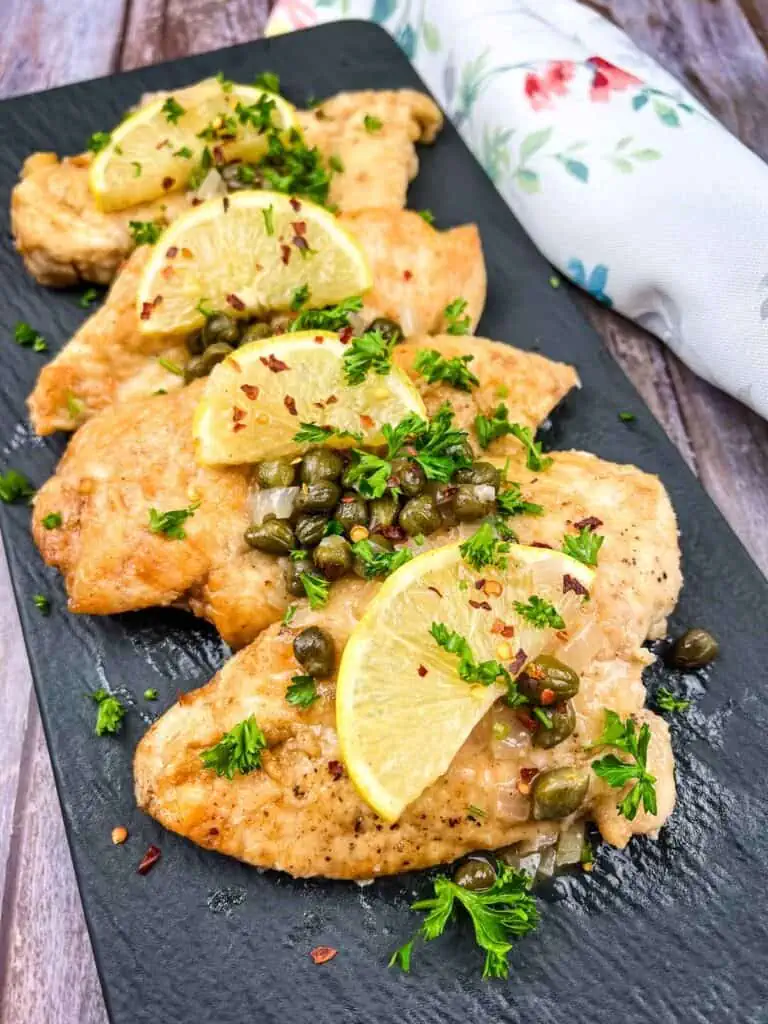
Chicken piccata is the Italian-American classic you already know from restaurant menus, and I make mine without the messy step everyone dreads: pounding the chicken flat. Butterfly it instead. Same tender bite, none of the plastic wrap and mallet mess on your counter.

This post may contain affiliate link(s). As an Amazon Associate, I earn from qualifying purchases. See Disclosure.
I’ve cooked this dish professionally for years, and it hasn’t changed much because it doesn’t need to. The sauce is the real reason people ask for the recipe: lemony, garlicky, and glossy enough to spoon over noodles or rice. I always make extra sauce, because one batch is never enough at my table.
31 of Chef Jenn's FAVE Casseroles
I've gathered 31 of my favorite casseroles for you and your family to love, all in a convenient ebook with no ads and no AI! Each of these scratch-made dishes is created, tested, and loved by Chef Jenn. Get your instant download now!

You'll get ad-free recipes like:
Spaghetti Casserole,
Sloppy Joe Casserole,
Cowboy Casserole,
and more!

This is a digital product. You'll receive an instant download link after purchase.
This is a weeknight dish, but it’s dressed up enough for company too.
Chef Jenn’s Take on Chicken Piccata
Most chicken piccata recipes start with a mallet and a piece of plastic wrap, and that’s the first place I ditch tradition. Pounding chicken breasts thin is messy, it flattens the texture unevenly, and it’s an extra step you don’t need. Butterflying gets you the same even thickness with one clean cut and a lot less cleanup.
I’ve made this dish more times than I can count over years of professional cooking, but the notes I have don’t include a specific comparison I can point to here. If you’ve clocked a difference between fresh and bottled lemon juice, or tested how long the sauce holds before it breaks, that’s worth adding.
The part that actually makes or breaks this dish is the sauce. Deglaze with wine, reduce it down, then swirl in cold butter off the heat so it stays glossy instead of turning greasy. Do it over high heat and the butter separates. Do it low and slow off the burner, and it stays silky every time.
What You’ll Love About Chicken Piccata
- This is quick enough for a weeknight, and if you butterfly the chicken the night before, it’s even faster, dinner in about the time it takes rice to cook.
- The sauce is the best part of this whole dish, and I always make sure there’s extra of it to spoon over noodles or rice.
- No pounding, no plastic wrap on the counter. I butterfly the chicken instead, and it’s faster and honestly less annoying than the classic method every recipe tells you to use.
Ingredients

- Chicken breasts – Butterflied horizontally. You’ll need 2 large breasts, or if they’re smaller, use one per person.
- Salt and pepper – I use kosher salt and freshly cracked black pepper.
- All-purpose flour – Just scoop the flour and level it off without tapping it.
- Shallots – Shallots are milder and sweeter than yellow or white onions.
- Tablespoons butter – this is for dredging the chicken. Don’t forget to add a pinch of salt and some pepper to season the flour, too.
- Olive oil – You will saute the chicken in olive oil. You don’t have to use your best olive oil. Any other oil will also work.
- Lemon juice – From freshly squeezed lemons. Uncork your inner foodie and add the zest from the lemons into the sauce if you like.
- White wine – Use a good-quality dry white wine. I cook with cheap Chardonnay and keep it in the fridge just for cooking. I save the expensive wine for drinking.
- Chicken broth – Use low or no sodium-added chicken broth.
- Capers – You can’t make Chicken Piccata without capers. Well, you can, but then it’s not chicken piccata. I use capers packed in brine. If they’re too strong for you, rinse them first.
- Freshly chopped parsley – Don’t skip this! Fresh parsley is the way to go.
How To Make Chicken Piccata
Scroll down for the full recipe card with exact measurements and printable instructions.
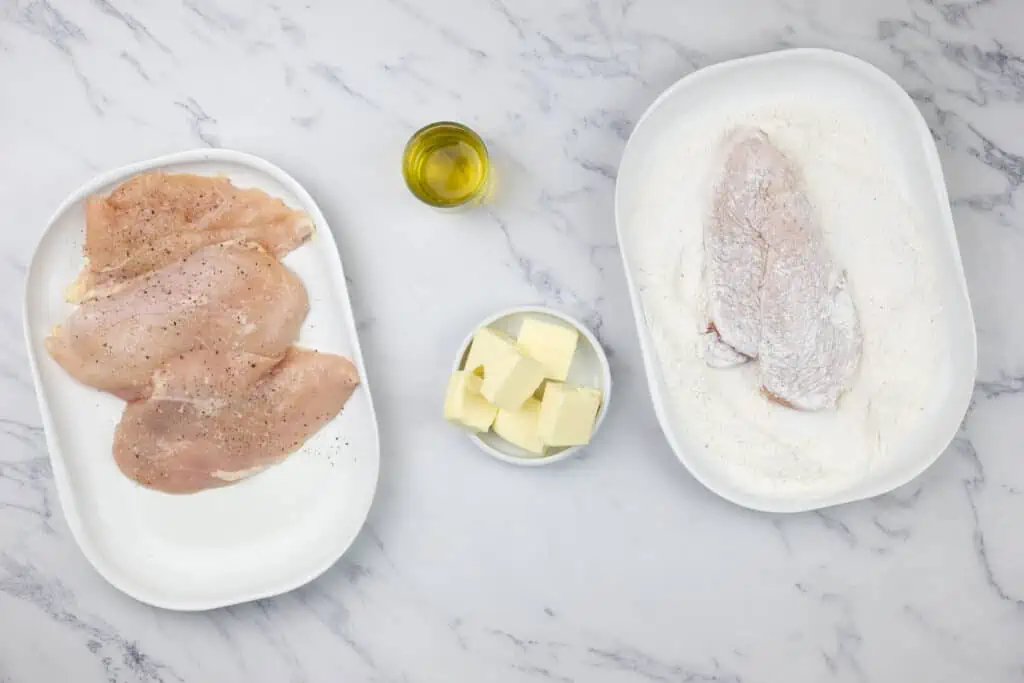
Season the chicken with salt and pepper on both sides. Dredge each piece in flour and shake off the excess. You want a thin coating, not a crust of raw flour, or it’ll turn gummy in the sauce.
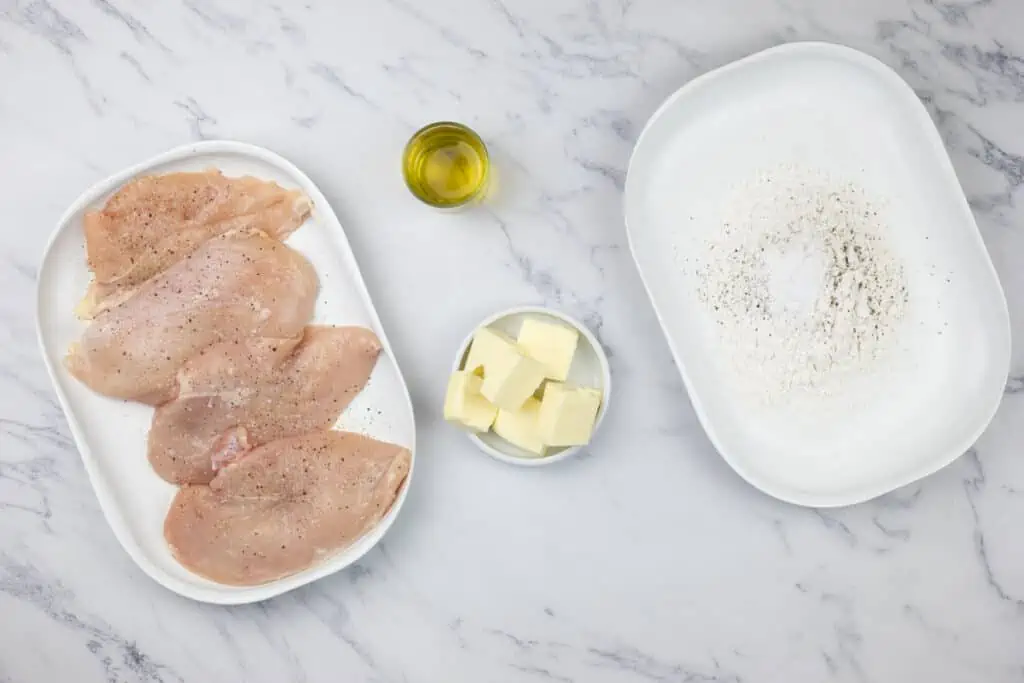
Heat the butter and olive oil in a large skillet over medium-high until the butter foams. The oil keeps the butter from burning at this heat, so use both.
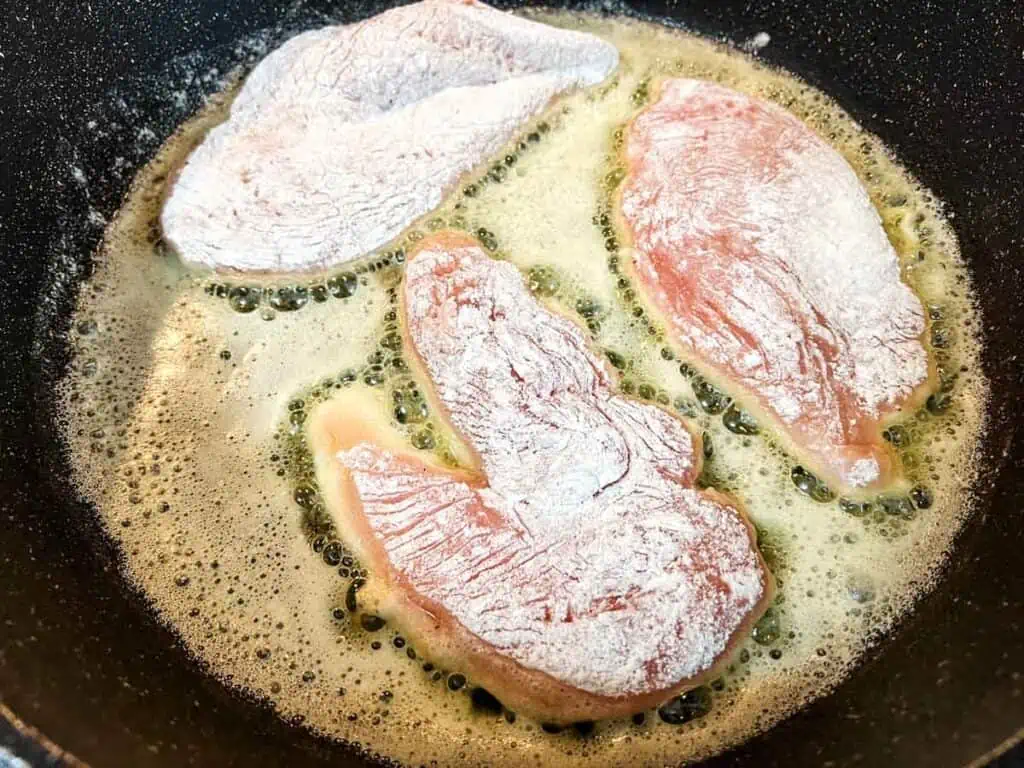
Add the chicken and cook until golden on both sides and cooked through, then set it aside. Work in batches so you don’t crowd the pan. Crowded chicken steams and stays pale instead of browning, and that color is where the sauce gets its depth. Add a little more butter and oil between batches as needed.
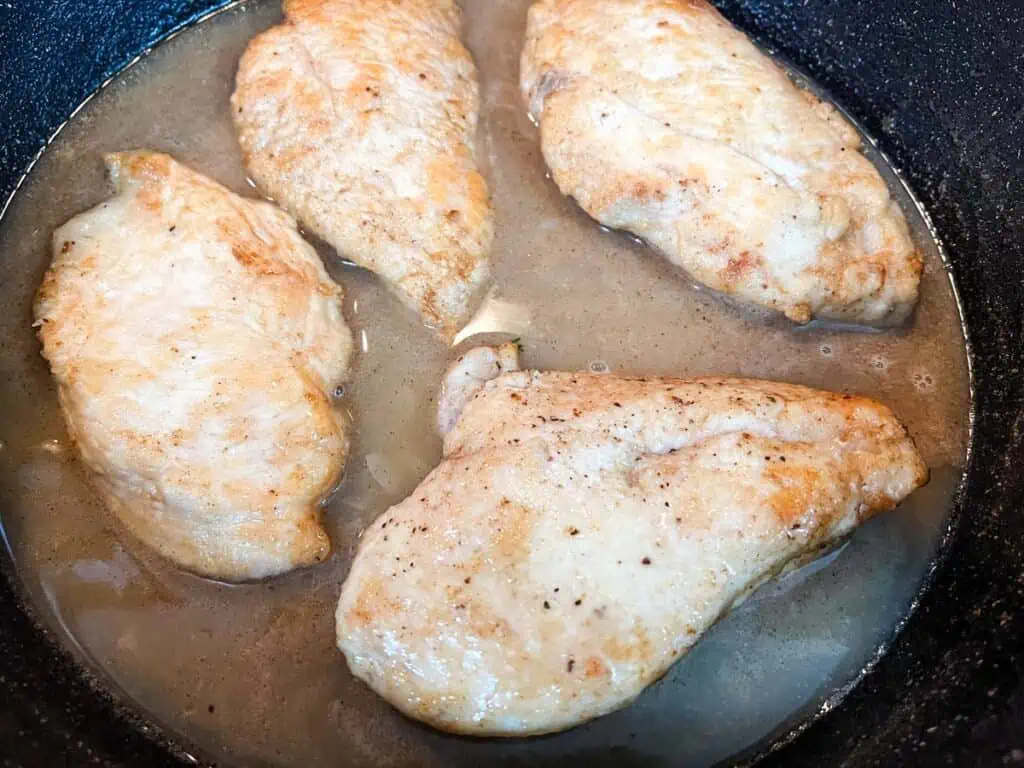
Deglaze the pan with the white wine and let it reduce for 2 to 3 minutes, scraping up the browned bits from the bottom. Then add the chicken broth and lemon juice.
Reduce the heat and simmer 2 to 3 minutes. Return the chicken to the pan and cook 3 to 4 minutes, until it reaches 165°F. Move the chicken to a platter to keep warm.

Stir in the capers and the remaining butter off a hard boil, swirling until the butter melts and the sauce turns silky. Add the butter cold and a bit at a time, that’s what gives the sauce its glossy body instead of a greasy layer on top.
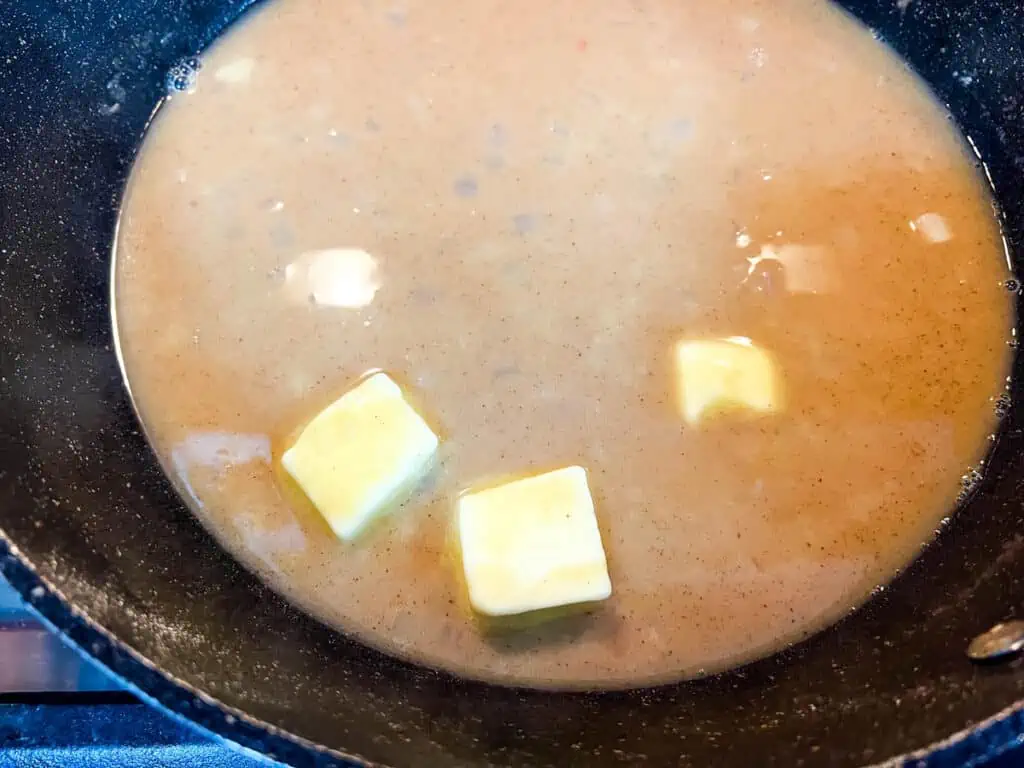

Spoon the sauce over the chicken and garnish with fresh parsley before serving.
How to Butterfly Chicken Breast
To start, place your chicken breast on a cutting board. Holding your knife parallel to the cutting board, slice into the side of the chicken breast, starting at the thicker end and stopping just short of the opposite edge. Be careful to keep the knife flat and steady, ensuring you don’t cut all the way through. Open the chicken breast like a book and then cut the chicken breasts in half
Make It A Meal
Chicken Piccata pairs wonderfully with a side of creamy mashed potatoes, al dente pasta, or even a light and crisp green salad for a balanced meal. For a heartier meal, start with a Caesar Salad and serve crisp bread on the side. I love this dish with buttered egg noodles; it’s simple and delicious!

Storage
Leftover Chicken Piccata can be stored in an airtight container in the refrigerator for up to three days. To reheat, simply warm it gently on the stove over low heat to preserve the moisture of the chicken. You can also freeze this dish. I freeze the chicken over top of the noodles and spoonfuls of sauce. It’s not quite as good as the original but it makes a quick and easy lunch or dinner.
Frequently Asked Questions
Piccata is dredged in flour only and finished with a caper and lemon sauce, while francese is dipped in egg batter before searing and usually skips the capers entirely.
Yes, boneless skinless thighs work well here, though you’ll skip the butterflying step since thighs are already thin and don’t need it.
That usually means the butter went in over high heat. Take the pan off the burner before swirling in the last of the butter, and it should come together smooth every time.
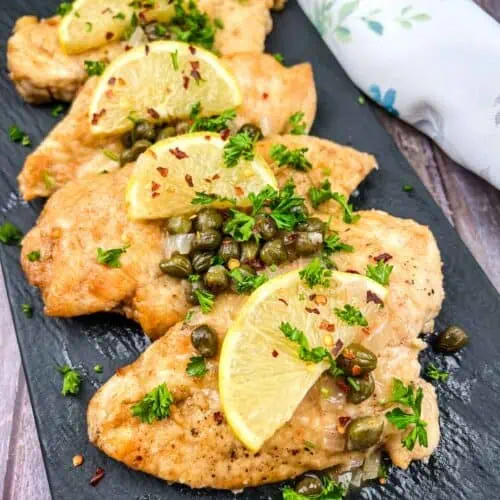
Chicken Piccata
Ingredients
- 2 chicken breasts about 1 pound; butterflied horizontally, then cut into 2 pieces to make 4 total pieces.
- 1 shallots finely chopped
- 1/2 teaspoon salt
- freshly cracked black pepper
- 1 cup all-purpose flour
- 6 tablespoons butter
- 4 tablespoons olive oil
- ⅓ cup lemon juice
- ½ cup wine
- 1 cup chicken broth
- ¼ cup capers
- 2 tablespoons fresh parsley
Instructions
- Season the chicken breasts with a pinch of salt and a few grinds of black pepper.
- Add the flour to a shallow dish and season the flour with the remaining salt and pepper. Then, dredge each piece of chicken in all-purpose flour, shaking off the excess. Ensure both sides are fully coated.
- In a large skillet, heat 2 tablespoons of butter and 2 tablespoons of olive oil over medium-high heat.
- Add the chicken and cook until golden brown on both sides and mostly cooked through. Don't crowd the pan!
- Remove the chicken from the skillet and set it aside. Repeat with the remaining chicken, adding another tablespoon of butter and 2 tablespoons of oil as needed.
- Add the white wine to the skillet you cooked the chicken in and deglaze, letting the wine reduce for 2-3 minutes. Then add the chicken broth and lemon juice.
- Reduce the heat and simmer for 2-3 minutes. Return the chicken to the pan and cook for 3-4 minutes or until the internal temperature of the chicken reaches 165 F. Transfer the chicken to a platter to keep warm.
- Turn off the heat and stir in the capers, lemon and the remaining butter until the butter is melted and the sauce is silky.
- Garnish with fresh parsley before serving and enjoy!
Notes
Chef Jenn’s Tips
- For an even cook, make sure your chicken breasts are of uniform thickness.
- Don’t skip the capers; they add a burst of flavor that’s key to this dish.
- If you’re not a fan of wine, you can substitute it with extra chicken broth, but the wine adds a lovely depth of flavor.
- Let the sauce simmer until it’s just thick enough to coat the back of a spoon. This ensures a rich, velvety texture that’s perfect for draping over the chicken. Alternatively, you can thicken the sauce with 1 teaspoon of cornstarch mixed with 2 tablespoons of water or chicken broth. Whisk this in and simmer to thicken.
Nutrition
A Note on Nutritional Information
Nutritional information for this recipe is provided as a courtesy and is calculated based on available online ingredient information. It is only an approximate value. The accuracy of the nutritional information for any recipe on this site cannot be guaranteed.
It has been ages since I made chicken piccata, and your recipe was simple. The tip to butterfly the breasts does make this much easier. And you are right, there was plenty of sauce.