
How to Pick and Freeze Strawberries (So They Actually Stay Good)
When strawberry season hits, I want all of it. Every flat I can get. The problem isn’t buying them; it’s keeping them. Most people freeze strawberries wrong and end up with a clumped, watery mess that’s only good for smoothies. Here’s how to pick and store those summer-ripe berries so they’re tasty all year long!
This post may contain affiliate link(s). As an Amazon Associate, I earn from qualifying purchases. See Disclosure.
This guide covers how to pick the best berries at the farm or farmers market and exactly how to freeze strawberries so they come out of the freezer individually, not in a solid brick. Hull first, wash second, dry completely, freeze in a single layer on parchment. That order matters and I’ll show you why.
31 of Chef Jenn's FAVE Casseroles
I've gathered 31 of my favorite casseroles for you and your family to love, all in a convenient ebook with no ads and no AI! Each of these scratch-made dishes is created, tested, and loved by Chef Jenn. Get your instant download now!

You'll get ad-free recipes like:
Spaghetti Casserole,
Sloppy Joe Casserole,
Cowboy Casserole,
and more!

This is a digital product. You'll receive an instant download link after purchase.
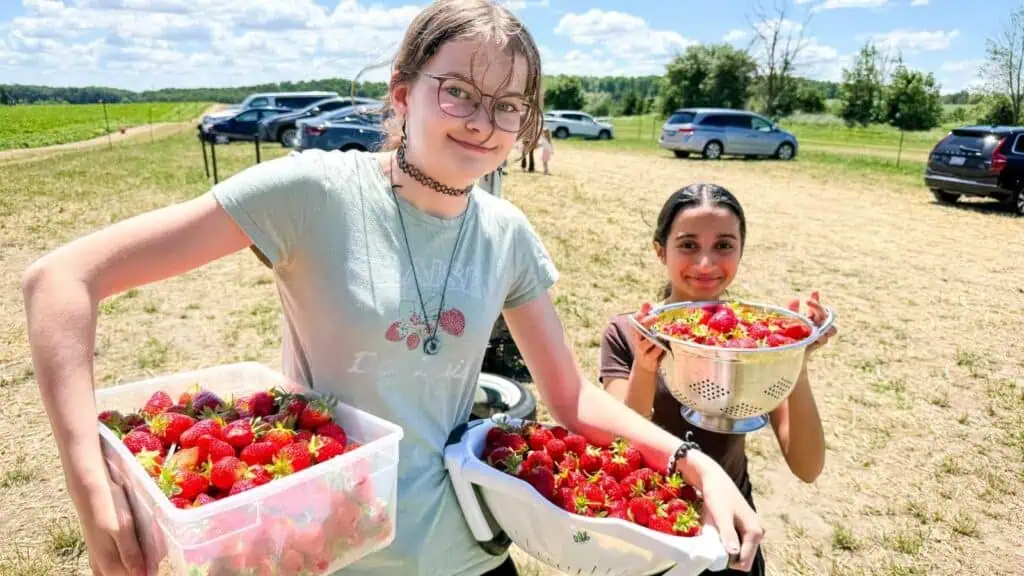
Whether you grow your own, pick them at a u-pick farm, or grab a flat at the market, the same rules apply. Get the picking right, and the freezing is easy.
Chef Jenn’s Take on Freezing Strawberries
The biggest mistake I see is people washing strawberries and then skipping the dry step entirely. They rinse the berries, hull them, and toss them straight onto a sheet pan. Every bit of surface moisture turns to ice during the freeze, and that’s what gives you ice-coated, mushy fruit instead of clean frozen berries you can actually use.
Get a small, sharp knife ready. I do all this in the sink in a large strainer basket. I rinse them, then slice the green stem off, then into another strainer to drip dry for a few mins while I do the rest of the berries.
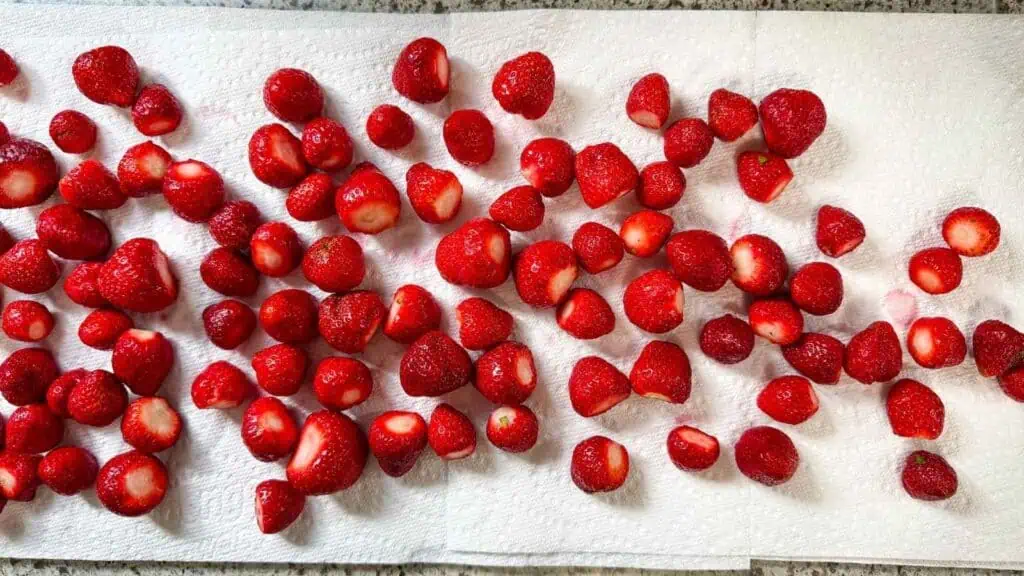
Rinse fast in cold water, hull, then lay them out in a single layer on a clean kitchen towel and give them real drying time, about 2 hours of air drying, or you can pat them down gently with paper towels if you’re working against the clock. They need to look completely matte before they go anywhere near the freezer.
I’ve got complete steps below; don’t forget to check those out because there are a few other tips you might find useful.
What You’ll Love About This Method
- You end up with individually frozen berries you can scoop out by the handful, not a solid block you have to chisel apart. That matters when you want a small amount for a recipe, not the whole bag.
- Wash first is the step most guides skip, and it’s the reason your frozen strawberries have been waterlogged. One order-of-operations change, and the results are different.
- No special equipment required. A sheet pan, parchment paper, and freezer bags or a vacuum sealer are all you need.
What to Look for When Picking Strawberries
Scroll down for the full freezing steps. Here’s what to know at the farm or market first.
At a U-Pick Farm
Go early in the season if you can. The first two weeks of a local strawberry season tend to produce the most flavorful fruit. As the season stretches and heat builds, berries get larger but often less sweet.
Look for berries that are fully red all the way to the tip, including right around the cap. Any white or pale green near the stem means it was picked before full sugar development, and it won’t sweeten after harvest. Strawberries don’t ripen off the vine.
The berry should feel firm but not hard. Soft spots mean overripe or damaged. Pass on those for freezing; they’ll go mushy. A slight give with full red color all the way through is what you want.
At the Farmers Market or Store
Smell the flat before you buy it. A good flat of strawberries should smell like strawberries from a foot away. No scent means no flavor.
Check the bottom of the container. Juice staining on the bottom means the berries inside are already breaking down. Fine for jam that day, not right for freezing.
Smaller berries tend to freeze better than very large ones. Large commercial berries are bred for size and shelf stability; smaller locally grown berries have better flavor concentration and hold up better after thawing.
How to Freeze Strawberries Step by Step
1. Wash first
Rinse berries under cold water in a colander. A fast rinse under running water to dislodge dirt and debris, not a soak. Soaking pulls flavor and adds water you don’t want. Shake off the excess, then spread them in a single layer on a clean kitchen towel. Pat the tops with paper towels to pull off surface moisture, or let them air-dry for about 2 hours. They should look completely matte, not glossy or damp.
Don’t rush the drying step. This is what keeps you from ending up with ice-coated fruit.
2. Hull them – sort of
Once the berries are dry, slice off the green tops with a paring knife. That’s it. You don’t need to dig out the core; it’s not necessary, and it wastes good fruit.
3. Freeze in a single layer on parchment
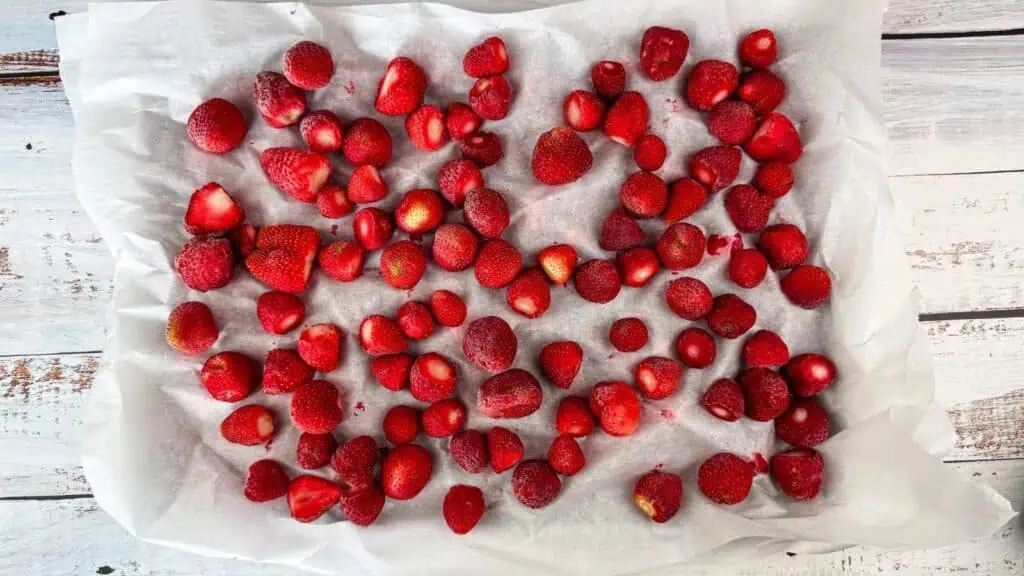
Line a rimmed baking sheet with parchment paper. Arrange the dry berries in a single layer with space between them so they’re not touching. If you have more berries than fit in one layer, lay down a second sheet of parchment directly on top of the first layer and add a second layer of berries on top of that. Slide the pan into the freezer uncovered and leave it until frozen solid, about 3-4 hours or overnight.
This sheet pan step is why you get individual berries instead of a clump. Don’t skip it.
4. Bag them up
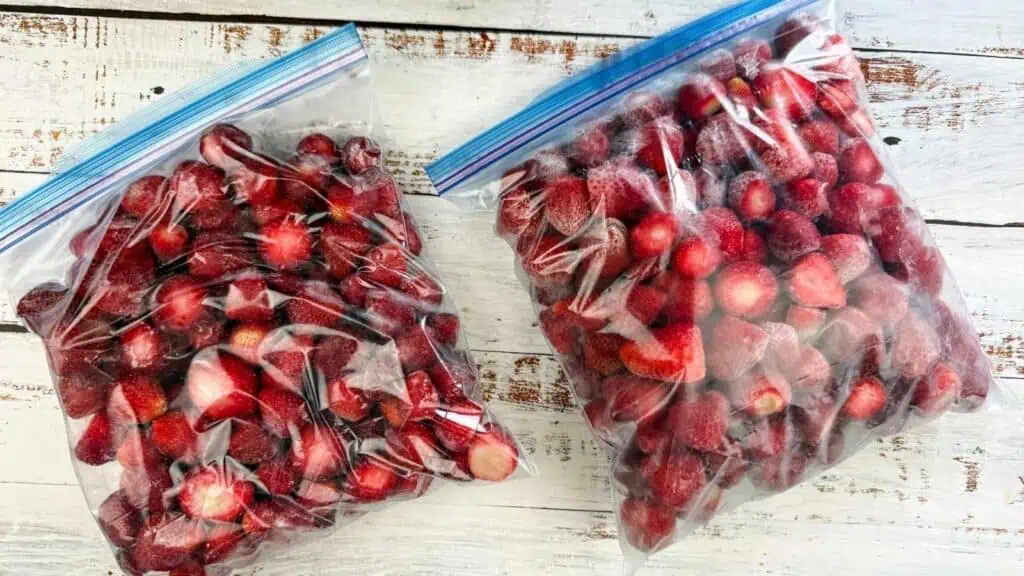
Once fully frozen, transfer berries quickly to labeled freezer-safe bags or vacuum-seal bags. With standard freezer bags, press out as much air as you can before sealing. With a vacuum sealer, seal according to your machine. Write the date on whatever you use. Work fast during transfer; if the berries sit out more than a few minutes, they’ll start sticking together.
What to Make With Frozen Strawberries
Frozen strawberries are best in cooked or blended applications. They don’t have the texture for a fresh fruit bowl after thawing, but for baked goods, desserts, and drinks they’re exactly right.
My Rhubarb & Strawberry Crumble works beautifully with frozen berries straight from the bag, no thawing required. Toss them in with the rhubarb and they’ll release just enough juice during baking.
The Strawberry Upside Down Cake is one of the best reasons to freeze strawberries whole. Pull them out mid-winter when fresh ones aren’t anywhere close to ripe.
Strawberry Shortcake Cookies work well with frozen berries thawed and patted dry. And Strawberry Cheesecake Ninja Creami Ice Cream is practically built for frozen fruit — no thawing needed.
Storage and Shelf Life
Frozen strawberries in airtight bags with air pressed out keep well for 10 to 12 months. After that, they’re still safe, but texture and flavor degrade. Label every bag with the date. For best results in baked goods, use within the first 6 months.
FAQs
Do you need to add sugar when freezing strawberries? No. A dry pack with no sugar or syrup is fine for most uses and gives you a cleaner strawberry flavor. Sugar packs were standard before modern airtight freezer bags. Skip them unless you specifically want a sweetened syrup for topping or ice cream.
Should you thaw frozen strawberries before using them in recipes? It depends on the recipe. For smoothies, use them frozen. For crumbles, pies, and cakes, you can usually add them frozen and extend the cook time slightly. For anything where texture matters, thaw in the refrigerator and drain the liquid before using.
How do you keep frozen strawberries from getting icy and mushy? Rinse then hull, dry them completely before they go on the sheet pan, flash freeze in a single layer before bagging, and remove as much air as possible from the bag. Each step matters. Skip any one of them, and the results are noticeably worse.
Can you freeze strawberries that are already a little soft? Soft berries freeze at whatever texture they are in. Use borderline-soft berries for jam, sauce, or smoothies the same day instead. Firm, fully ripe berries freeze the best.
Tips for the Best Results
- The 2-hour air-dry sounds like a lot, but it’s hands-off time. Wash and hull in the morning, freeze in the afternoon.
- If you’re doing a large batch across multiple sheet pans, stagger them in the freezer so air can circulate. A crammed freezer freezes more slowly and unevenly.
- Freeze in recipe-size portions if you can. Two cups per bag means you grab one bag for a crumble without opening your whole supply.
- Large berries can be halved before freezing if you know they’re going into baked goods. Frozen whole large berries take longer to break down in the oven and can leave pockets of moisture.
- If you picked berries and can’t freeze them the same day, refrigerate them unwashed. The texture drops the longer they sit.