
What is Maggi Seasoning? Everything You Need to Know (Plus How to Use It!)
If you’ve ever poked through my recipes and wondered, “what on earth is Maggi sauce and why does Chef Jenn keep telling me to add a teaspoon of it?”, then this post is for you.
This post may contain affiliate link(s). As an Amazon Associate, I earn from qualifying purchases. See Disclosure.
Maggi (pronounced MAH-jee, not Maggie) is one of those ingredients that pro cooks have been quietly using for over a century to make food taste better. It’s a small bottle, it lives in the international aisle, and once you know about it, you’ll see why I keep slipping it into soups, stews, gravies, and ground beef recipes.
31 of Chef Jenn's FAVE Casseroles
I've gathered 31 of my favorite casseroles for you and your family to love, all in a convenient ebook with no ads and no AI! Each of these scratch-made dishes is created, tested, and loved by Chef Jenn. Get your instant download now!

You'll get ad-free recipes like:
Spaghetti Casserole,
Sloppy Joe Casserole,
Cowboy Casserole,
and more!

This is a digital product. You'll receive an instant download link after purchase.
In this post, I’m breaking down exactly what Maggi seasoning is, where it came from, what it tastes like, how to use it, and which CWYL recipes already lean on it for that deep, savory umami magic. Let’s dig in!
What is Maggi Seasoning?
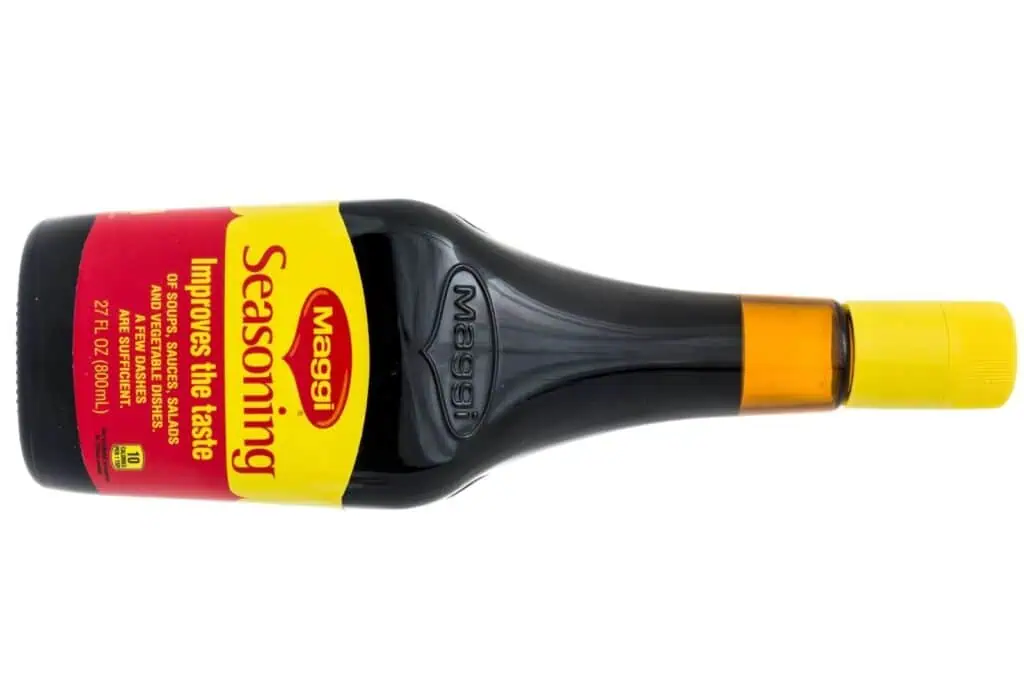
Maggi seasoning is a dark, savory liquid seasoning sauce that’s used to add umami, that meaty, savory, “what is THAT?” flavor to all kinds of dishes. It comes in a distinctive small, square-bottomed bottle with a yellow and red label, and a teaspoon or two adds a depth of flavor that’s almost impossible to fake with other ingredients.
It looks a lot like soy sauce when you pour it out, but it’s NOT soy sauce. It’s its own thing entirely. The European original is made with hydrolyzed wheat protein, salt, and a blend of seasonings that gives it a flavor reminiscent of lovage (an herb that tastes like a cross between celery, parsley, and fennel). It’s deeply savory, a little salty, with herbal and almost meaty undertones.
You’ll find it labeled as Maggi Seasoning, Maggi Sauce, or Maggi Würze (in German) but they’re all the same product family.
A Quick History of Maggi
Maggi was invented in Switzerland in the late 1800s by a flour miller named Julius Maggi. He was on a mission to create an affordable, convenient flavor enhancer for working-class families who needed to make humble meals taste richer without expensive ingredients.
Spoiler alert: he nailed it.
The first Maggi factory opened in 1887, and the seasoning quickly became a kitchen staple across Europe. From there, it spread around the world, picking up a fanatical following in Vietnam (where it’s practically synonymous with banh mi sandwiches), Mexico, Germany, India, and beyond. Today, Maggi is owned by Nestlé and you can find a version of it in almost every country.
Different regions actually make slightly different versions of Maggi, which is why the bottle you buy in Mexico tastes a little different from the one made in Germany or the one made in China. The most common one in U.S. grocery stores is made in China and has a robust, pleasant flavor.
What Does Maggi Seasoning Taste Like?
This is where Maggi gets tricky to describe, because it really doesn’t taste like anything else. But I’ll try!
It’s:
- Deeply savory — that pure umami punch that makes broth-y dishes taste like they cooked all day
- Salty — but with way more depth than plain salt
- Herbal and slightly earthy — thanks to that lovage-like quality
- A little bit beefy or meaty — even though there’s no meat in it
- Concentrated — a little goes a LONG way
Think of it like Worcestershire sauce’s more sophisticated, less tangy cousin. Worcestershire has that vinegar bite and tamarind sweetness; Maggi is straighter with pure savory depth without the tang.
Maggi Seasoning vs. Soy Sauce vs. Worcestershire Sauce
People often ask if you can substitute one for the other. Short answer: kind of, but not really. Here’s how they differ:
Maggi seasoning is herbal, savory, and concentrated. It’s wheat-based (the European original) and has that distinct lovage-celery-fennel quality. It’s the umami booster.
Soy sauce is salty and fermented, with a cleaner, brighter flavor. It’s soy-based (obviously) and works beautifully in Asian cooking but doesn’t have the herbal depth of Maggi.
Worcestershire sauce is tangy and complex, with vinegar, tamarind, and anchovy giving it that distinctive sweet-tart-savory thing. Great in Bloody Marys and on burgers, but not the same as Maggi.
In a true pinch, you can swap soy sauce or Worcestershire for Maggi, but the dish will taste different. I always recommend grabbing a bottle if you can — it’s affordable, it lasts forever, and you’ll find yourself reaching for it more than you’d think.
Where to Buy Maggi Seasoning
Maggi can be a bit of a treasure hunt depending on your store, but it IS out there. Here’s where to look:
- The international aisle — usually with the soy sauces and Asian condiments
- The Latin American section — Mexican Maggi (Jugo Maggi) is super popular and often shelved here
- Near the broths, bouillon, and gravy mixes — this is where I usually find it in mainstream grocery stores
- Asian grocery stores — pretty much guaranteed to have it
- World markets like Cost Plus — often carries multiple versions
- Online — Amazon and other retailers carry it if your local stores don’t
The bottle is small (typically around 4 fl oz), but it lasts forever because you only use a little at a time. One bottle can easily last me 6 months to a year.
Heads up: Maggi does contain MSG, and the European versions contain wheat (so it’s not gluten-free). If you’re sensitive to either of those, look for a gluten-free umami booster like coconut aminos or Bragg Liquid Aminos as an alternative.
How to Use Maggi Seasoning
This is where Maggi really shines. A teaspoon (or even less) added to the right dish can transform it from “fine” to “wait, why does this taste so good?”
Here are my favorite ways to use it:
In Soups and Stews
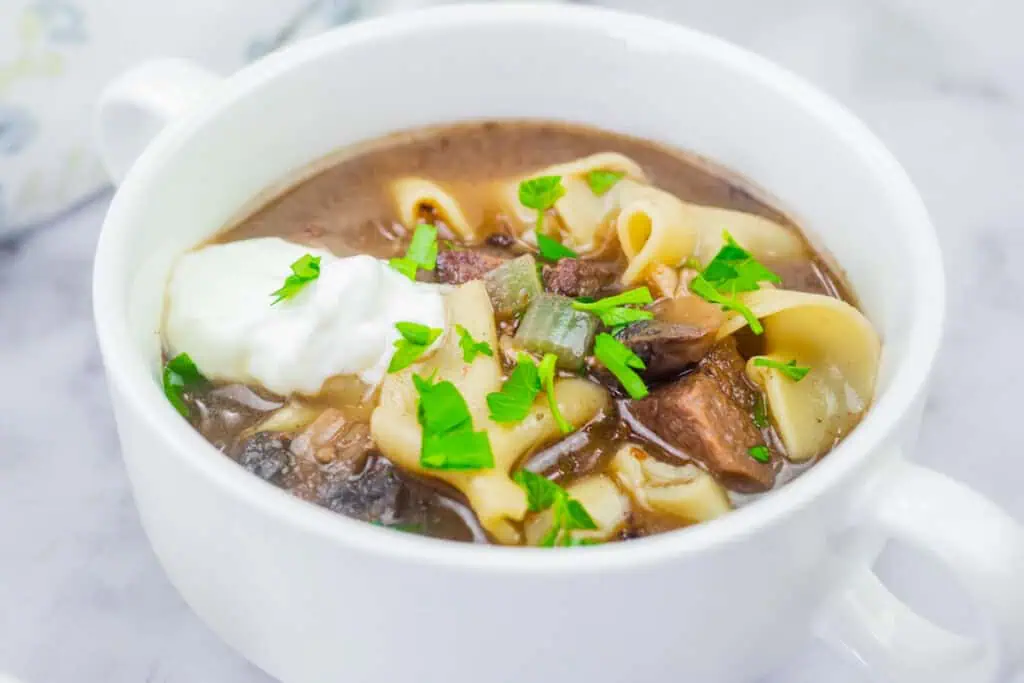

This is where Maggi earns its spot in your pantry. A teaspoon stirred into a pot of soup or stew adds a deep, rich, almost-roasted quality that you just can’t get from beef broth alone. My Beef Stroganoff Soup gets a teaspoon of Maggi to make that beefy broth taste incredible, and my Cabbage Roll Soup uses it the same way. I literally call it an “umami flavor bomb” in that recipe because that’s exactly what it is.
In Slow Cooker and Braised Dishes
Long, slow cooking can sometimes mute flavors, and Maggi is the perfect counter to that. My Creamy Slow Cooker Beef Stroganoff with Stew Beef uses 2 teaspoons of Maggi as a feature ingredient — it’s what separates this stroganoff from the standard sour-cream-and-flour version most blogs run with. The Maggi gives the gravy a roasted, savory depth you can taste in every bite.
In Ground Beef Dishes
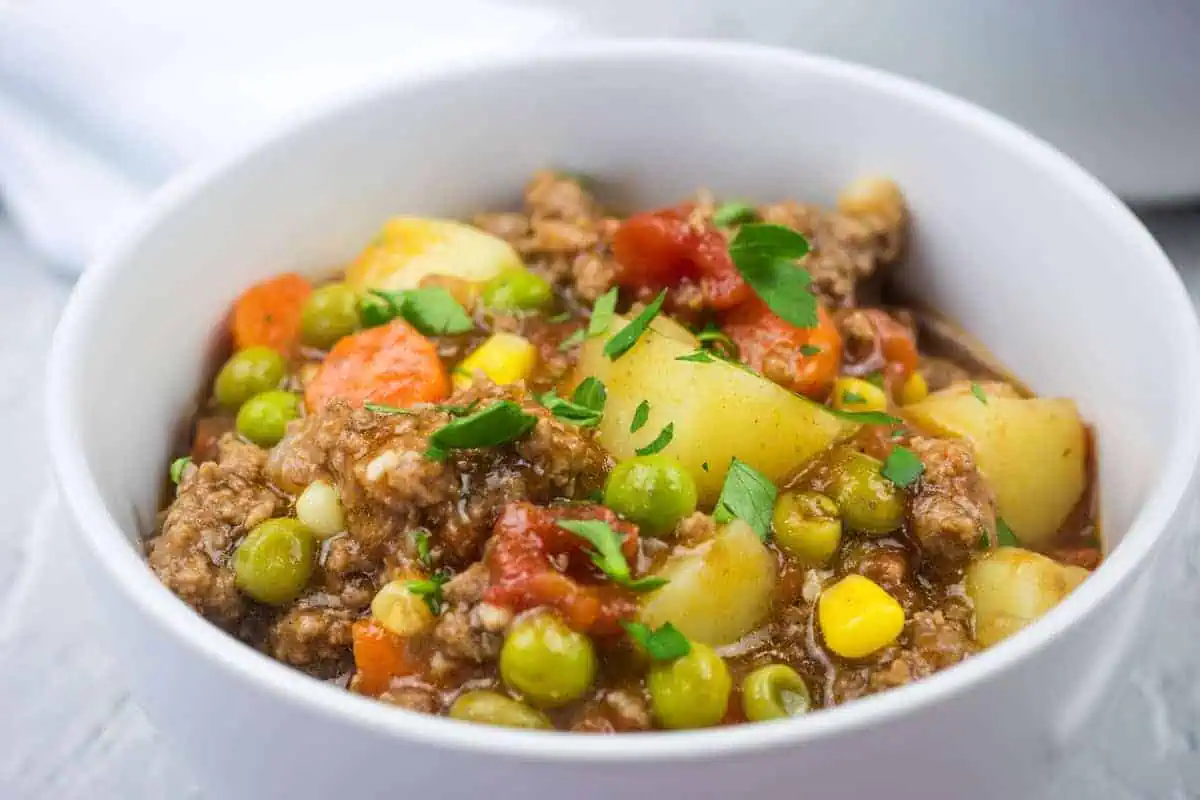
Hamburger meat is a blank canvas, and Maggi is one of the easiest ways to make it taste like more than just ground beef. My Homestyle Hamburger Stew (my mom’s recipe!) uses a teaspoon of Maggi to give the broth that “this took all day” flavor. Try it next time you’re making chili, sloppy joes, or a meat sauce.
In Mashed Potato Toppers and Comfort Food
Maggi loves carbs almost as much as it loves beef. My Shepherd’s Pie Baked Potatoes use a teaspoon of Maggi in the meaty filling where it adds umami flavor that makes you go back for one more bite, then another.
As a Finishing Sauce
In Vietnamese cooking, a few drops of Maggi get sprinkled on top of finished dishes like fried eggs with black pepper, hot rice with butter, banh mi sandwiches, even a bowl of pho. Try a few drops on your next scrambled eggs and prepare to be amazed.
In Marinades for Meat
Maggi works beautifully in marinades for steak, chicken, pork, and tofu. Mix it with garlic, a splash of oil, a little brown sugar, and some pepper, and you’ve got an instant flavor-booster marinade.
In Gravy
A teaspoon of Maggi in homemade gravy or pan sauce gives it that “restaurant-style” depth. Same trick works for au jus, mushroom gravy, and onion gravy.
How Much Maggi Should You Use?
Less than you think! This stuff is concentrated.
For most recipes:
- Soups and stews (4–8 servings): 1 teaspoon
- Slow cooker dishes: 1–2 teaspoons
- Ground beef dishes (1 lb): ½ to 1 teaspoon
- As a finishing sauce: a few drops to ½ teaspoon
- Marinades: 1–2 teaspoons per pound of protein
Start small, taste as you go, and add more if needed. You can always add more, but you can’t take it out once it’s in.
Important: Maggi is salty, so always add it BEFORE you finish seasoning your dish with salt. Add the Maggi, taste, then decide if you need more salt.
Storing Maggi Seasoning
Maggi is shelf-stable and lasts for ages, even after opening. Here’s how to keep it at its best:
- Store it in a cool, dark cupboard
- Keep the cap tightly sealed
- It doesn’t need to be refrigerated
- Most bottles will keep for 2+ years unopened, and a year or so once opened
If you notice the flavor getting weaker over time, it’s still safe to use — just bump up the amount slightly to compensate.
Substitutes for Maggi Seasoning
If you absolutely can’t find Maggi (or you’re out and need to make dinner happen tonight), here are the best substitutes:
- Worcestershire sauce — the closest swap; use the same amount, but expect a tangier finish
- Soy sauce + a tiny pinch of dried herbs — works in a pinch for soups
- Bragg Liquid Aminos — gluten-free umami; similar concentrated savory quality
- Coconut aminos — milder and slightly sweet, but still adds depth
- A combo of beef bouillon + soy sauce — closest to mimicking that meaty depth
But honestly? Just grab a bottle. It’s worth it.
CWYL Recipes That Use Maggi Seasoning


Looking for inspiration? Here are the CWYL recipes where Maggi pulls its weight:
- Creamy Slow Cooker Beef Stroganoff with Stew Beef — Maggi is the secret weapon here, taking this from a decent stroganoff to one I keep going back to
- Beef Stroganoff Soup — adds umami depth to that big, beefy broth
- Cabbage Roll Soup — my “umami flavor bomb” trick for this hearty soup
- Homestyle Hamburger Stew — Mom’s recipe with a chef’s twist
- Shepherd’s Pie Baked Potatoes — adds savory depth to the meaty filling
The Bottom Line on Maggi Seasoning
Maggi seasoning is one of those quiet kitchen secrets that pro cooks have known about for over a century. It doesn’t shout, it doesn’t take over a dish, and you’d never spot it on an ingredient list and think “wow, that’s the magic.” But once you start using it, you’ll notice your soups taste deeper, your gravies taste richer, and your weeknight ground beef dishes taste like you actually tried.
A small bottle costs just a few bucks, lasts forever, and unlocks a whole new layer of flavor in your kitchen. Track one down on your next grocery run and let me know what you make with it in the comments!
Frequently Asked Questions
Maggi has a deeply savory, umami-rich flavor with herbal undertones (similar to lovage, which tastes like a cross between celery, parsley, and fennel). It’s salty, slightly meaty, and concentrated; a little goes a long way.
No! They look similar but taste very different. Soy sauce is fermented and salty with a cleaner flavor, while Maggi is herbal, savory, and more concentrated. Maggi is wheat-based (in the European version), while soy sauce is soy-based.
The European versions of Maggi contain wheat and are NOT gluten-free. Some regional versions (like the one made in Vietnam) are soy-based instead. Always check the label. If you need gluten-free, try coconut aminos or Bragg Liquid Aminos as
Yes, most versions of Maggi contain MSG (monosodium glutamate). MSG is what gives it that punchy umami quality. If you’re avoiding MSG, look for MSG-free umami boosters like coconut aminos.
Look in the international aisle, near the soy sauces, in the Latin American section, or near broths and gravy mixes. Asian grocery stores almost always carry it, and you can find it online if your local store doesn’t stock it.